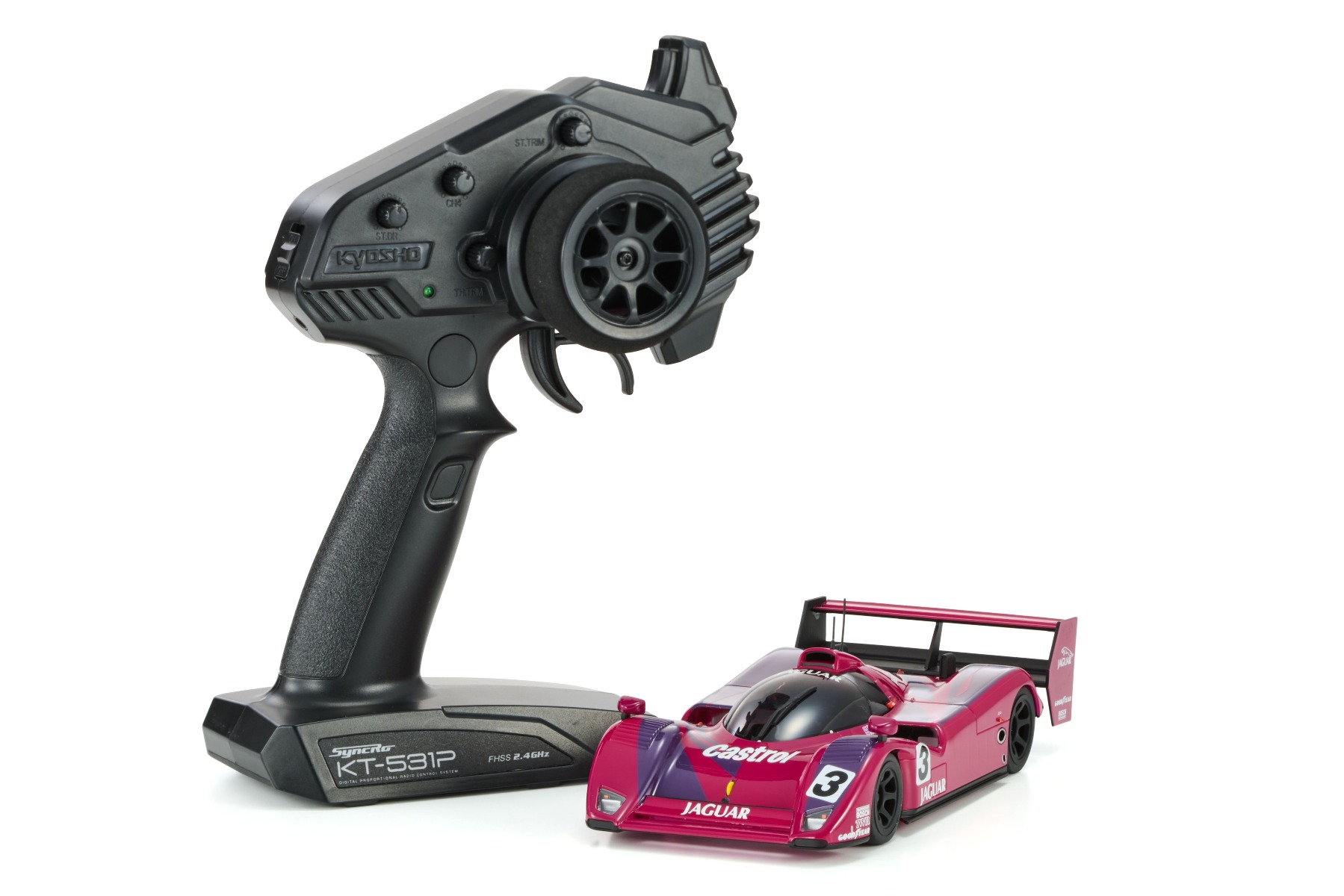
There’s a weird gap between “I have a Mini-Z and I love driving it” and “I’m actually showing up to a race and running competitively.” Most of the info out there is either too basic or too deep in the weeds for someone who hasn’t even found a club yet.
This is what I’d tell myself at the start.
Finding a Track Is the Whole First Problem
Mini-Z racing happens at indoor RC hobby tracks, usually on RCP tile — that interlocking foam tile that looks like a parking lot in miniature. The racing scene is real but small, and it’s mostly invisible if you don’t know where to look.
Start at your local hobby shop and ask if they run Mini-Z nights or know who does. Check the Kyosho America race calendar. Search Facebook for “[your city] RC track” — a lot of clubs still live there. If you’re near any metro area, there’s almost certainly something within driving distance that isn’t listed anywhere obvious.
When you find a track, go watch first. See what classes they run, what cars people are on, what the vibe is. Mini-Z racing culture tends to be extremely welcoming to newcomers — people want the class to grow.
The Car You Have Is Probably Fine to Start
This is the thing most people get wrong in both directions. Some people show up with a totally stock car on plastic bushings and wonder why they’re spinning out in corners. Others spend $400 building a race car before they’ve ever turned a lap around other people.
The floor is: bearings, decent tires for the surface, a T-plate that isn’t cracked. That’s it. You can be competitive in most club-level racing on a well-maintained MR-03 or MA-020 without brushless, without fancy electronics, without a full tuning kit. If you’re still choosing between the MR-03 and MR-04, the MR-03 vs MR-04 Buyer Guide covers which platform fits your track and budget.
The ceiling is higher than most people ever reach. But you can’t tune your way to fast if you haven’t learned the track yet.
RCP Is a Skill Surface and It Will Humble You
If you’ve been running in a parking lot or on carpet at home, RCP is going to feel different. It’s high grip, which sounds like a good thing, and it is — but it also punishes imprecision hard. Braking points matter. Trail braking matters. Smooth inputs matter.
The first few race nights you’re probably going to spin in places that feel like they shouldn’t be spins. That’s normal. The fast guys at your track have hundreds of hours on that specific layout. The gap isn’t usually the car.
One thing that actually helps: run practice sessions with deliberately more rear grip than you need. It forces cleaner corner entry habits before you add rotation back in.
Classes and Formats — Know What You’re Signing Up For
Most clubs run at least two classes: a beginner/spec class and an open/modified class. Spec usually means narrower tire rules, stock or near-stock motor, same car for everyone. Modified means brushless is legal, wider tire options, full tuning allowed.
Race formats vary but usually mean 3–4 minute qualifying heats followed by main events split by finishing position into A, B, and C mains. You’re almost certainly starting in the C main. That’s fine. That’s where most good racers started.
Ask specifically what the tire rules are before you go. Tire compound rules are the biggest gotcha for newcomers — showing up with the wrong compound can mean a DNQ.
Setup Changes That Actually Matter at the Club Level
There’s a lot of tuning content out there aimed at people who are already racing at a high level. At the club entry level, a shorter list of things actually moves the needle.
Tires — compound matched to the surface. This matters more than almost anything else. See the tire guide if you’re not sure where to start.
Gear ratio — one or two teeth from stock can make a car that pulls cleanly out of corners versus one that bogs and then snaps.
Gyro sensitivity — if you’re running an MR-03 RWD and you have a gyro, dial it until the car stops correcting so aggressively that it fights your own steering inputs. Most people run too much gyro.
Front end slop — check your king pins and ball cups. A worn front end makes the car feel vague and unpredictable in ways that look like a tire problem.
Don’t change two things at once. You won’t know what helped.
The Actual Fastest Path to Being Competitive
It’s not parts. It’s seat time with someone faster watching.
After a few race nights, find whoever is consistently running at the front of the A main and just ask them to watch you drive for five minutes. Most Mini-Z racers are extremely happy to share what they see. The feedback you get from one experienced set of eyes is worth more than a full rebuild.
The car is a tuning problem. The driver is a coaching problem. They require different solutions.
The first time you make an A main after months of Bs and Cs is genuinely satisfying in a way that’s hard to explain to anyone outside the hobby. Go find your track. And if you’re ever wondering whether the grind is worth it, read why people quit Mini-Z racing — knowing the traps ahead of time is half the battle.
— Mini-Z Modder
Product images courtesy of Kyosho.