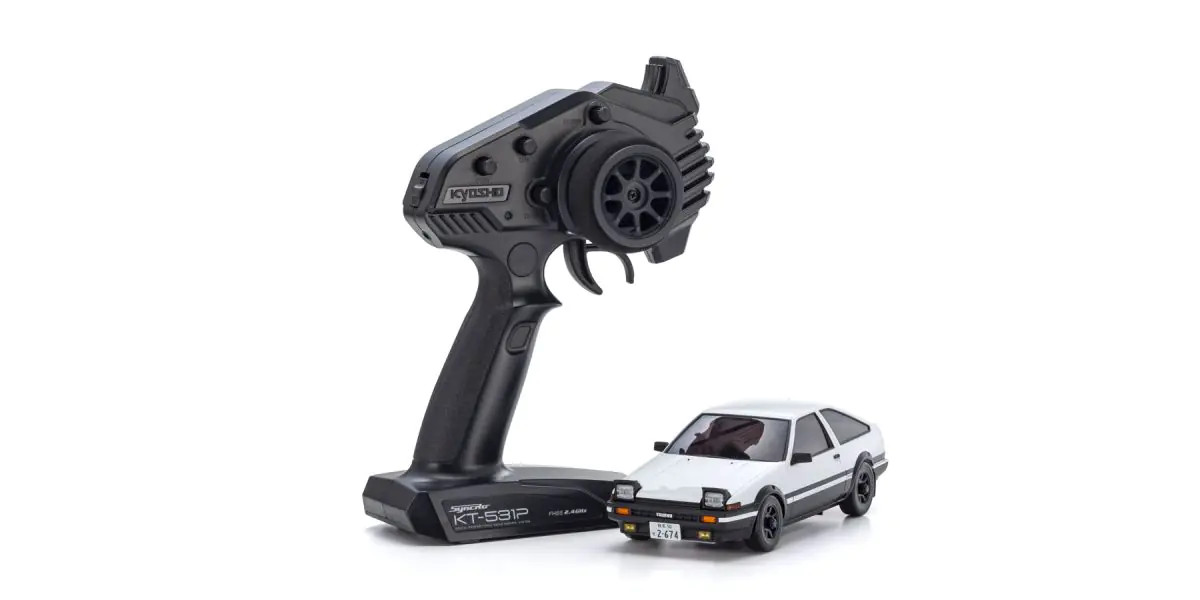
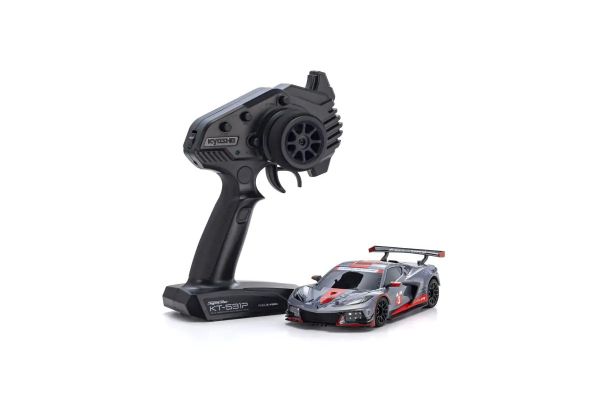
Every month or so, someone posts in an RC forum asking the same question: “I want to get into RC racing but I don’t know where to start.” The replies are always the same — 1/10 touring car, 1/8 buggy, short course truck, whatever the local track runs.
Nobody ever says Mini-Z. And they should.
The Cost Argument
A competitive 1/10 touring car setup costs $400-800 by the time you add a radio, charger, batteries, and a few spare parts. A 1/8 buggy is even more. That’s a lot of money to spend before you know if you even like racing.
A Kyosho Mini-Z RTR set is $150-200. That includes the car, transmitter, and everything you need to drive — just add batteries. Your first upgrade cycle (tires, bearings, maybe a T-plate) is another $30-50.
For under $250, you’re racing. Not just driving in a parking lot — actually racing at a club or hobby shop with other people.
If you decide racing isn’t for you, you’re out $200 instead of $700. If you love it, you’ve found the hobby for less than the cost of a dinner out.
The Space Argument
A 1/10 car needs a real track. That means a dedicated facility, an outdoor space, or a big parking lot. If there’s no 1/10 track near you, you’re driving alone.
Mini-Z runs on RCP (carpet tile) tracks that fit inside hobby shops, basements, garages, and community centers. A competitive RCP track takes up about the same floor space as a large bedroom. That means more tracks exist in more places — and if there isn’t one near you, you can build one yourself for a few hundred dollars.
The car itself fits in a shoebox. Your entire pit bag fits in a backpack. Try that with a 1/8 buggy.
The Skill Transfer
Here’s the part people don’t expect: Mini-Z racing teaches real racing skills. Everything scales.
- Racing lines are the same at 1/28 as they are at 1/10 or full size.
- Setup tuning — suspension stiffness, tire selection, differential tuning — follows the same principles.
- Race craft — passing, defending, tire management, race strategy — is identical.
- Throttle control — arguably harder on Mini-Z because the cars are so responsive that sloppy inputs are magnified.
Plenty of 1/10 racers run Mini-Z as cross-training. The skills transfer directly. If you ever move to a larger scale, everything you learned at 1/28 comes with you.
The Community
Mini-Z racing attracts a specific type of person. They tend to be detail-oriented, mechanically curious, and genuinely helpful to newcomers. The community is small enough that regulars at your local track will know your name within a few weeks.
Because the cost is low, the atmosphere is less intense than big-budget RC classes. People are there to have fun. Yes, the racing is competitive — but it’s competitive in the way a bowling league is competitive, not the way a pro series is.
Nobody’s going to judge you for being slow on your first night. They’re going to help you set up your car and then beat you by three laps while giving you tips at the pit table.
The Depth
The mistake people make about Mini-Z is thinking it’s a toy. It’s not. The upgrade path goes as deep as any other RC platform:
- Stock class — Box stock rules, driver skill is everything
- Modified class — Brushless motors, tuned ESCs, advanced suspension
- Drifting — The MA-020 platform has an entire drift scene
- Crawling — The MX-01 is a legitimate micro crawler with scale detail
Within racing alone, the setup variables include T-plate stiffness, spring rates, differential type and tension, gyro gain, motor timing, tire compound, wheel offset, ride height, camber, toe — it’s a proper race car in a tiny package.
You can spend years going deeper into Mini-Z setup and still find new things to learn. The ceiling is not the limitation. The floor is what makes it accessible.
The Honest Downsides
It’s not all perfect. Here’s what Mini-Z doesn’t do well:
Outdoor racing is limited. These are indoor cars. Wind, rain, and rough surfaces are deal-breakers. If you want to race outside, look at larger scales.
Parts availability varies. If you’re not near a well-stocked hobby shop, you’re ordering online and waiting. The aftermarket is deep but not as instant as 1/10 touring car parts.
It’s addictive. I’m not kidding. The “one more upgrade” loop is real. The cost per upgrade is low, which paradoxically makes it easy to spend more than you planned over time.
The Bottom Line
If you’ve been thinking about RC racing — any scale, any type — Mini-Z is the lowest-risk, highest-reward way to find out if you like it. The investment is small, the learning curve is friendly, the community is welcoming, and the hobby has enough depth to keep you engaged for years.
Buy an RTR set. Find a local race night. Show up. That’s it. Just know that the hobby has a few predictable traps — Why People Quit Mini-Z Racing covers them so you can avoid them.
→ Need help picking a platform? MR-03 vs MR-04 buyer guide. → Ready to start upgrading? First 5 upgrades. → Curious about AWD? MA-020 platform guide.
— MiniZ Modder
Product images courtesy of Kyosho.