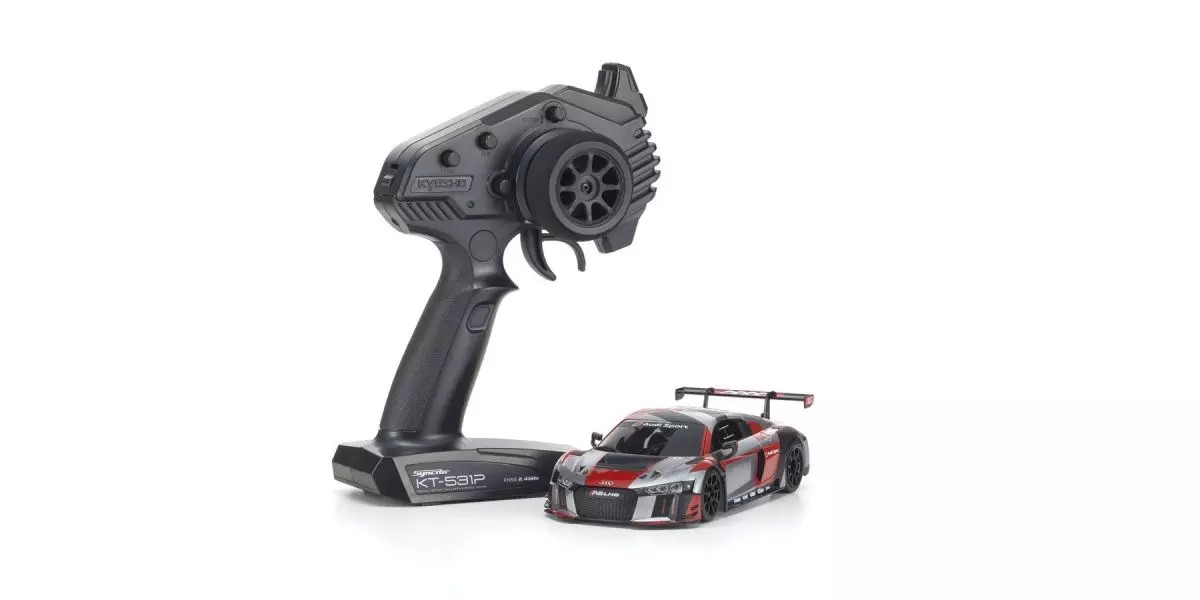
Everyone wants to know what to buy first. And I get it — you’re new, the parts catalog is enormous, and people on forums are throwing around names like “PN Racing” and “Atomic” like everyone already knows what they mean. So you ask, and someone inevitably posts a $300 wish list.
That’s not help. That’s a shopping cart.
Here’s what I’d actually do with $50. Not what looks good on paper — what moves the needle.
The Thing That Actually Changes the Car
Bearings. Full stop.
Stock Mini-Z cars come with bushings, which are fine for parking lot circles but noticeably draggy compared to a proper ball bearing set. A full ceramic or stainless bearing kit for an MR-03 or MA-020 runs $10–$15, and the difference is immediate. The car rolls smoother, the motor runs cooler, and you get more runtime out of a charge because you’re not fighting friction on every wheel rotation.
This is the one upgrade that’s true across every platform, every skill level, every use case. Brush off the people who say “you won’t feel it” — they’ve been running bearings so long they forgot what bushings felt like.
That $12–$15 is the most justified spend in Mini-Z. Everything else is situational.
Where Beginners Burn the Budget
The second thing most people buy is a motor upgrade. Usually a brushless conversion kit. And I understand the appeal — more speed, it’s a real upgrade, people talk about it constantly.
But here’s the problem: a brushless motor on a car with stock tires and sloppy driver input is genuinely worse than stock. You don’t have the throttle control to use the extra power. The torque on corner exit will spin the rear before you can react. And now your lap times are slower, your car is harder to drive, and you’ve spent $40–$60 chasing something that made things worse.
I watched a guy at our Tuesday night race go through this exact arc in about three months. Bought a $55 brushless kit. Lost consistency immediately. Blamed the tires. Bought new tires. Blamed the ESC. Started looking at a $70 ESC. The original car was fine — he just added complexity before he had the driving skill to manage it.
Motors come later. Not first.
How to Actually Spend $50
So bearings are $15. That leaves $35. Here’s where I’d put it:
Tires: $12–$18. The second most impactful upgrade, period. Kyosho KS compounds or Yeah Racing radials — pick the compound that matches your surface. If you’re on RCP foam track matting, a softer compound will stick better and you’ll carry more corner speed instantly. If you’re running on hard floor or asphalt, a harder compound keeps the car from overrotating on entry. Check the tire guide to match the compound to what you’re actually driving on. Don’t skip this.
T-plate or front spring swap: $10–$15. If your car feels too stiff and planted — like it’s understeering off slow corners — a softer T-plate will let the rear breathe and help rotation. Carbon T-plates are cheap and the difference in feel is real. This is one of those changes that’s immediately obvious and costs almost nothing. Less useful for beginners who are still building consistency, but if you’ve been driving for a few months and the car feels wrong in slow corners, this is your lever.
That’s it. Bearings, tires, maybe a T-plate. You’re right at $50, your car is meaningfully better on all three, and you haven’t made it harder to drive.
The Rule That Actually Holds
Spend on grip and efficiency before you spend on power. Bearings give you efficiency. Tires give you grip. Together they make the car respond better, go faster in corners, and actually feel like an upgrade. A motor gives you more top speed that you may or may not be able to use.
I’ve seen $200 brushless builds get beaten by a box-stock car on fresh Kyosho tires with a $12 bearing kit. Not because brushless isn’t faster — it is — but because the driver with the well-maintained stock car was in control of every corner, and the guy with the hot rod was managing the car instead of driving it.
Your $50 isn’t going to win you a national championship. But spent right, it’ll make your car easier to drive fast — and that’s the foundation everything else gets built on.
→ Once you’ve got the basics sorted, Your First 5 Upgrades walks through the next logical steps in order.
— Mini-Z Modder
Product images courtesy of Kyosho America.